

INNOCHILL · Engineering Center

Application Notes

System-level fluid guidance for real applications and operating conditions.

Thermal Fluids

Application-specific guidance connecting operating conditions, materials, risks and fluid-selection criteria.

Quick AnswerUse these resources to understand the engineering criteria first, then move to the related Solution, Technology or Product page for product-level evaluation.

Start here

Engineering Library29 resources
INNOCHILLApplication Note
Application NoteJul 20, 2026

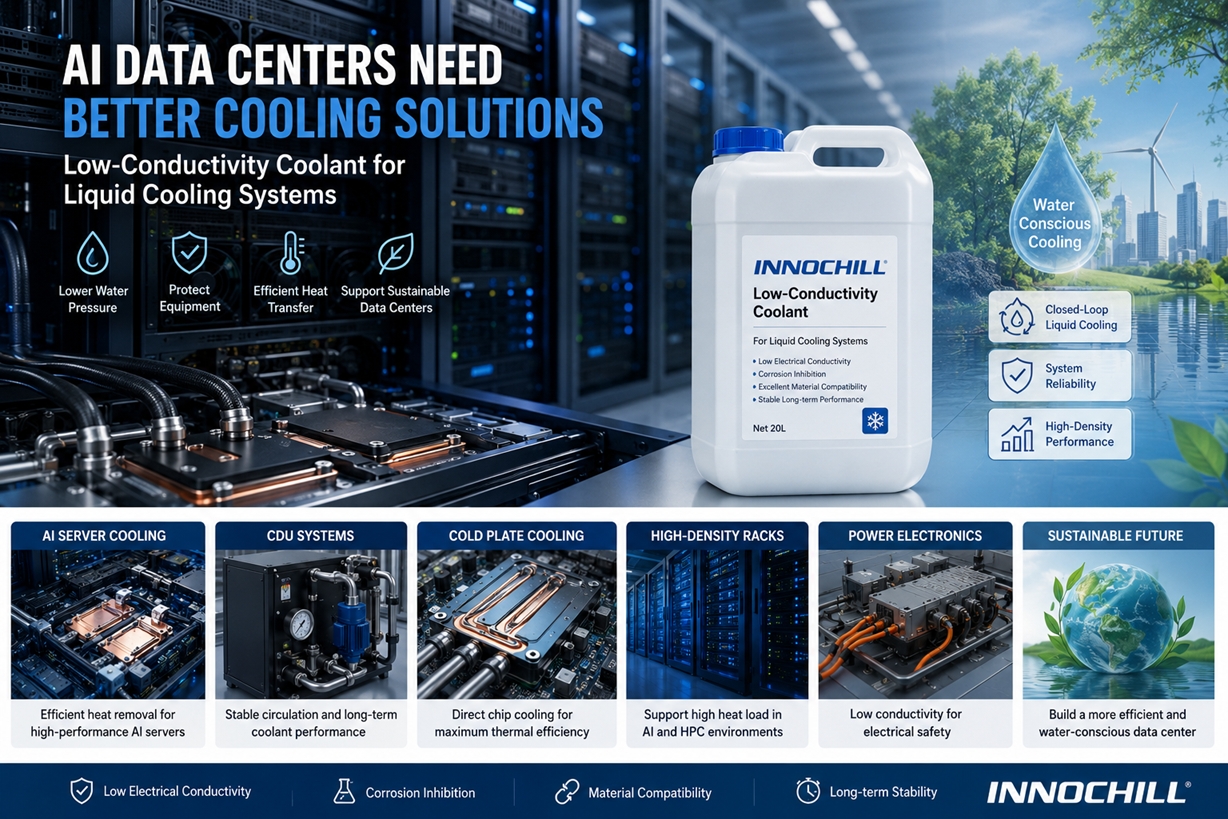
AI Data Center Liquid Cooling: Why Low Conductivity Coolants Are Essential for Future AI Infrastructure

AI Computing Growth Drives the Liquid Cooling Revolution: Why Low Conductivity Coolants Matter for Future Data Centers Introduction The rapid development of artificial intelligence is transforming the architecture of modern data centers. Large AI models, machine learning platforms, and high-performance computing systems require unprecedented computing power. As GPU performance continues to increase, the heat generated […]

Read more
INNOCHILLApplication Note
Application NoteJul 14, 2026

I Data Center Liquid Cooling Revolution: Why Low Conductivity Coolant Is Becoming a Critical Material for Next-Generation Computing Infrastructure

AI Data Center Liquid Cooling Revolution: Why Low Conductivity Coolant Is Becoming a Critical Material for Next-Generation Computing Infrastructure Introduction Artificial intelligence is transforming the global data center industry. From large language models (LLMs) and generative AI to autonomous driving, scientific computing, and industrial intelligence, AI applications are creating unprecedented demand for computing power. However, […]

Read more
INNOCHILLApplication Note
Application NoteJun 29, 2026

What Fluid Is Used in Data Centers? Data Center Cooling Fluid Guide|InnoChill

Introduction Data center cooling used to be mostly about air. Cold air entered the server room, hot air left the racks, and large HVAC systems handled the thermal load. That model is changing. AI servers, GPU clusters, high-density racks, edge computing, and high-performance computing systems are increasing heat generation inside data centers. As a result, […]

Read more
INNOCHILLApplication Note
Application NoteJun 22, 2026

Data Center Liquid Cooling Coolant: Why Coolant Selection Matters for Water-Conscious AI Infrastructure

AI data centers are changing the way cooling systems are designed. As GPU clusters, AI training servers, and high-density computing equipment continue to grow, traditional air cooling and evaporative cooling systems are facing increasing pressure. Higher rack density means more heat must be removed from a smaller space. At the same time, data center water […]

Read more
INNOCHILLApplication Note
Application NoteJun 15, 2026

AI Data Center Liquid Cooling Coolant for Cold Plate & CDU Systems | INNOCHILL

As AI data centers continue to deploy higher-density GPU servers, liquid cooling is becoming an important solution for heat management. Traditional air cooling is still widely used, but many high-performance AI workloads now require more efficient cooling methods such as cold plate cooling, direct-to-chip cooling, CDU secondary loops, and closed-loop liquid cooling systems. In these […]

Read more
AI Data Center Water Challenge: Why Low-Conductivity Coolant Matters for Liquid Cooling
Application NoteJun 8, 2026

AI Data Center Water Challenge: Why Low-Conductivity Coolant Matters for Liquid Cooling

AI Data Centers Are Facing a Water Challenge: Why Low-Conductivity Coolant Matters for Liquid Cooling Artificial intelligence is changing the way data centers are designed. As AI workloads grow, data centers are no longer judged only by computing power. Energy consumption, water use, cooling efficiency, and environmental responsibility are becoming key factors in data center […]

Read more
INNOCHILLApplication Note
Application NoteJun 1, 2026

What is Low Conductivity Coolant? EV, Electronics & Radar Applications | InnoChill

What is Low Conductivity Coolant? Low conductivity coolant, also called low conductivity coolant fluid or low electrical conductivity coolant, is a specialized thermal management fluid designed to transfer heat while maintaining controlled electrical conductivity in closed-loop cooling systems. It is used in EV battery thermal management, electronics, radar cooling systems, RF modules, power electronics and […]

Read more
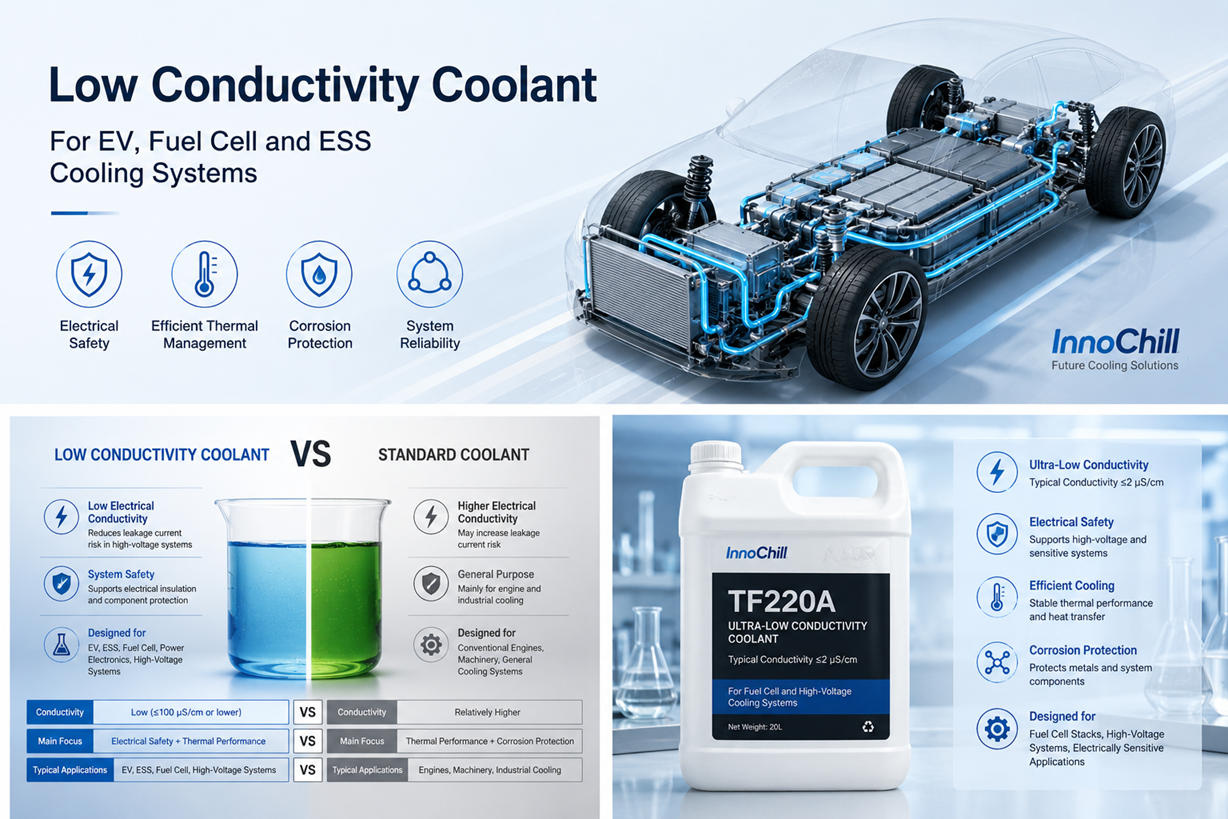
What Is Low Conductivity Coolant? Guide for EV, Fuel Cell and ESS Cooling Systems
Application NoteMay 11, 2026

What Is Low Conductivity Coolant? Guide for EV, Fuel Cell and ESS Cooling Systems

What Is Low Conductivity Coolant? Guide for EV, Fuel Cell and ESS Cooling Systems Low conductivity coolant is becoming an important thermal management fluid for electric vehicles, fuel cell vehicles, energy storage systems, power electronics, and high-voltage cooling systems. In conventional engines, coolant is mainly selected for freeze protection, boiling protection, corrosion resistance, and heat […]

Read more
INNOCHILLApplication Note
Application NoteMay 1, 2026

Cold Weather Coolant Failure: Crystallization, Corrosion, Cavitation and Winter Coolant Problems

Cold Weather Coolant Failure: Crystallization, Corrosion, Cavitation and Winter Coolant Problems Cold weather coolant failure can affect passenger cars, commercial vehicles, heavy-duty diesel engines, mining trucks, construction machinery, generators, and industrial cooling systems. In winter, coolant problems may appear as: Low coolant level Coolant warning light Coolant crystallization or slush formation Poor circulation Corrosion and […]

Read more
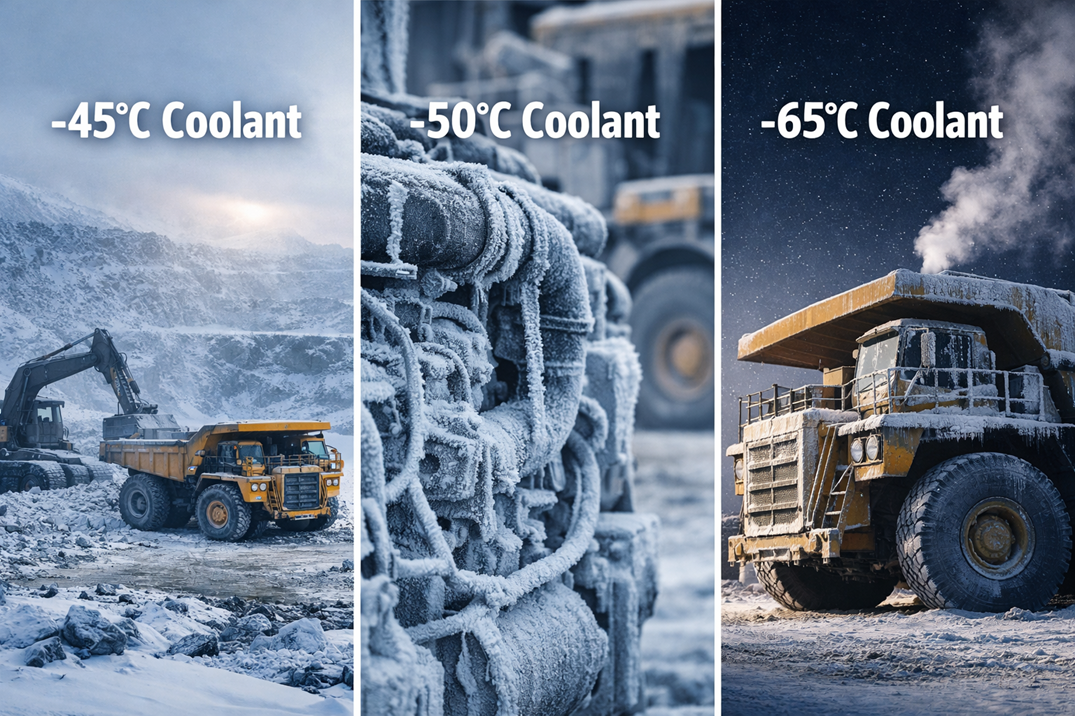
When -45°C Coolant Is No Longer Enough for Extreme Mongolian Mining Conditions
Application NoteApr 24, 2026

When -45°C Coolant Is No Longer Enough for Extreme Mongolian Mining Conditions

When -45°C Coolant Is No Longer Enough for Extreme Mongolian Mining Conditions Mongolia Is Not Just Cold — It Is Operationally Extreme In many cold-region applications, -45°C coolant has been widely used as a practical baseline solution. It provides basic freezing protection and supports a wide range of standard operating conditions. However, in Mongolia—especially in […]

Read more
INNOCHILLApplication Note
Application NoteApr 7, 2026

Fuel Cell Cooling Challenges & Solutions (2026 Guide): Why Low Conductivity Coolants Matter

Fuel Cell Cooling Challenges & Solutions Why Low Conductivity Coolants Are Critical for System Safety What Are the Main Challenges in Fuel Cell Cooling? Fuel cell cooling systems face three major challenges: electrical conductivity control, material compatibility, and long-term stability. Unlike traditional cooling systems, fuel cell cooling requires low conductivity coolant to prevent electrical leakage, […]

Read more
Why Cooling Fluids Matter More in Electrified Underground Equipment | INNOCHILL
Application NoteJan 19, 2026

Why Cooling Fluids Matter More in Electrified Underground Equipment | INNOCHILL

Why Cooling Fluids Matter More in Electrified Underground Equipment From Thermal Risk to System Reliability In recent years, electrification has rapidly expanded from surface electric vehicles into underground and heavy-duty equipment, including loaders, drilling rigs, and tunneling machinery. For manufacturers and operators such as Normet and Epiroc, this transition is not simply about replacing diesel […]

Read more